Surrogacy laws are all over the map
By Carly Mallenbaum
Published on March 29, 2026.
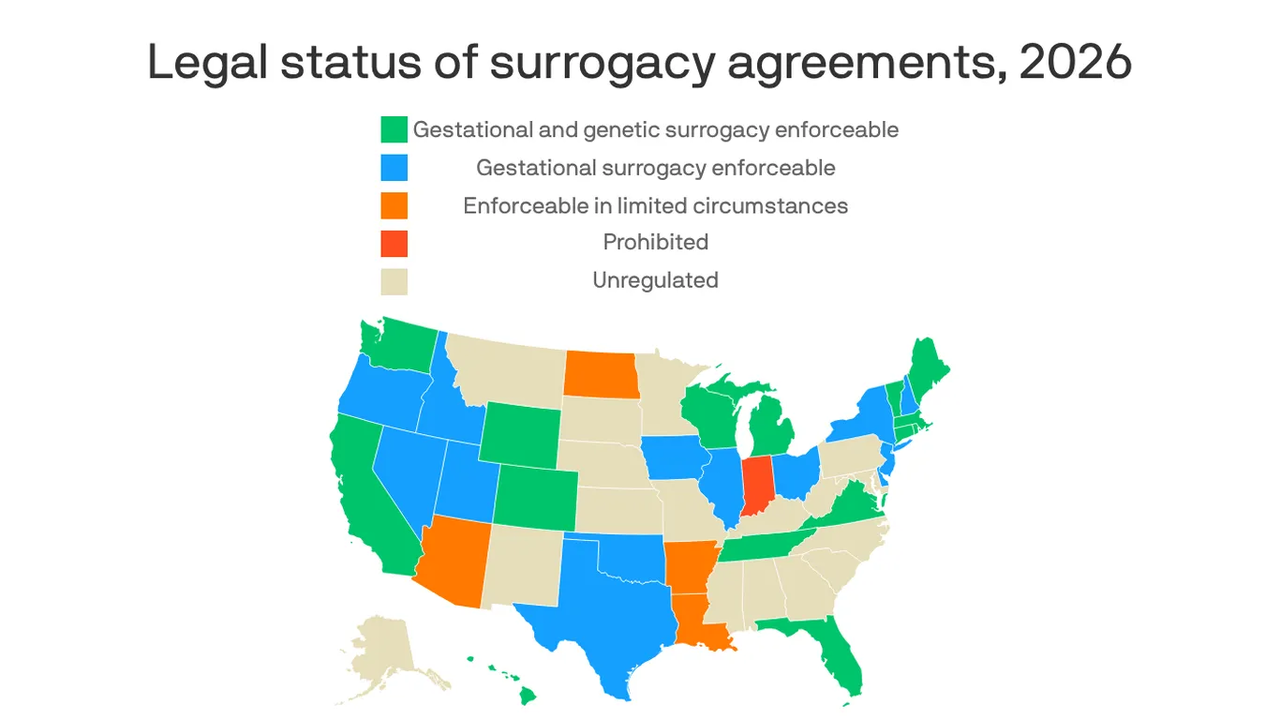
Without a federal law, surrogacy in the U.S. is governed by a patchwork of local rules, which can determine whether agreements are legally binding or who is recognized as a parent at birth. As of 2026, surrogate agreements are enforceable in 31 states, void in one, and unregulated in 17. Major differences between state laws include how a surrogate must be compensated, who becomes the legal parents of a child born via surrogate, and whether genetic surrogacy (when the surrogate uses her own egg) is permitted. Some state regulations have barriers for intended parents who are single, unmarried, not a heterosexual couple and/or not genetically related to the child. Despite these challenges, most states still allow for surrogacy, even in those where laws are unclear, according to Surrogacy360.
Related Articles

Florida approved millions for immigration enforcement. Where it goes is surprising
Florida has allocated millions in grants for local law enforcement to enhance enforcement, though most agencies are likely missing out due to budget constraints.

Formerly homeless people, including veterans, could be evicted if Trump administration plan is implemented
The Trump administration’s plan to shift $3 billion in federal funding to transitional housing for formerly homeless people could force them to live in cars, causing severe health challenges.

Lawmakers may allow some school suspensions after growing concerns over violent elementary students
Minnesota lawmakers may lift a partial suspension ban on K-3 students, amid growing concerns over violent student misbehavior, though the measure faces challenges from staff injuries and budget cuts.