Chemical Signature Hidden in Lunar Rocks Hints at Oxygen in The Ancient Moon
Published on April 3, 2026.
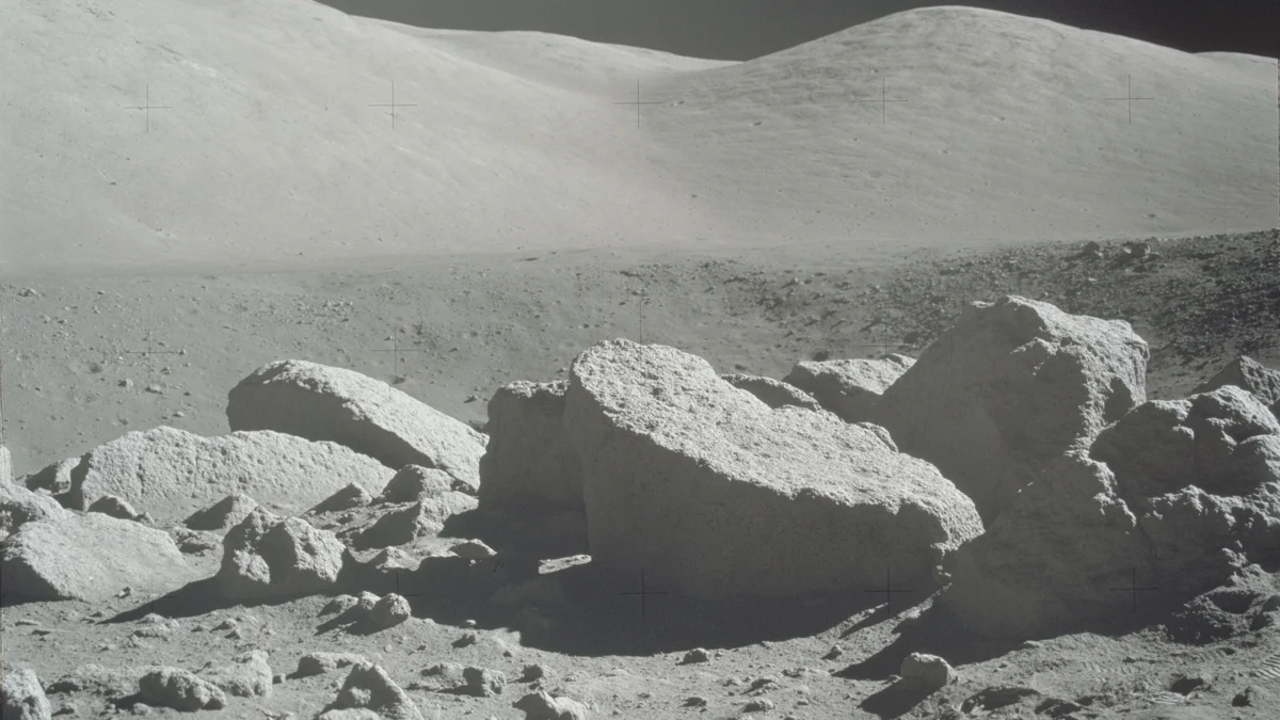
Scientists from the Georgia Institute of Technology and the Macalester College have found that a chemical signature in lunar rocks that could indicate the origin of the Moon, suggesting that it formed under similar conditions to Earth's early Earth and the Moon. The study, published in Nature Communications, used cutting-edge electron microscopy to investigate the chemical signature of titanium in an ancient lunar magma, which could reveal the relative availability of oxygen in the Moon's interior when it formed around 3.8 billion years ago. The team found that about 15% of the titanium in these rocks carries less of an electrical charge than expected, trivalent titanium, which occurs only when the oxygen available for chemical reactions is low. The researchers have identified over 500 analyses of lunar ilmenite that could contain trivalant titanium. They believe future studies of lunar rocks could reveal new details about how the moon's chemistry varies across different locations and time periods.
Related Articles
Mass. man sentenced for illegally trafficking dozens of endangered animal parts
Reading man Adam Bied, 40, was sentenced to eight months in prison for illegally trafficking over 100 endangered animal parts into the United States, violating wildlife trafficking laws.

Fisherman Rescues Great White Shark: Video
A fisherman rescued a great white shark from a dangling line, while immigration officials searched for potential culprits in the area.

N.J. State Police rescue adorable bear cub from side of busy expressway
New Jersey State Police rescued a bear cub from the side of Route 78, handing over the responsibility to the Department of Environmental Protection.