Satellite observations offer insight into a tsunami's early stages
By Marta Serafinko
Published on March 27, 2026.
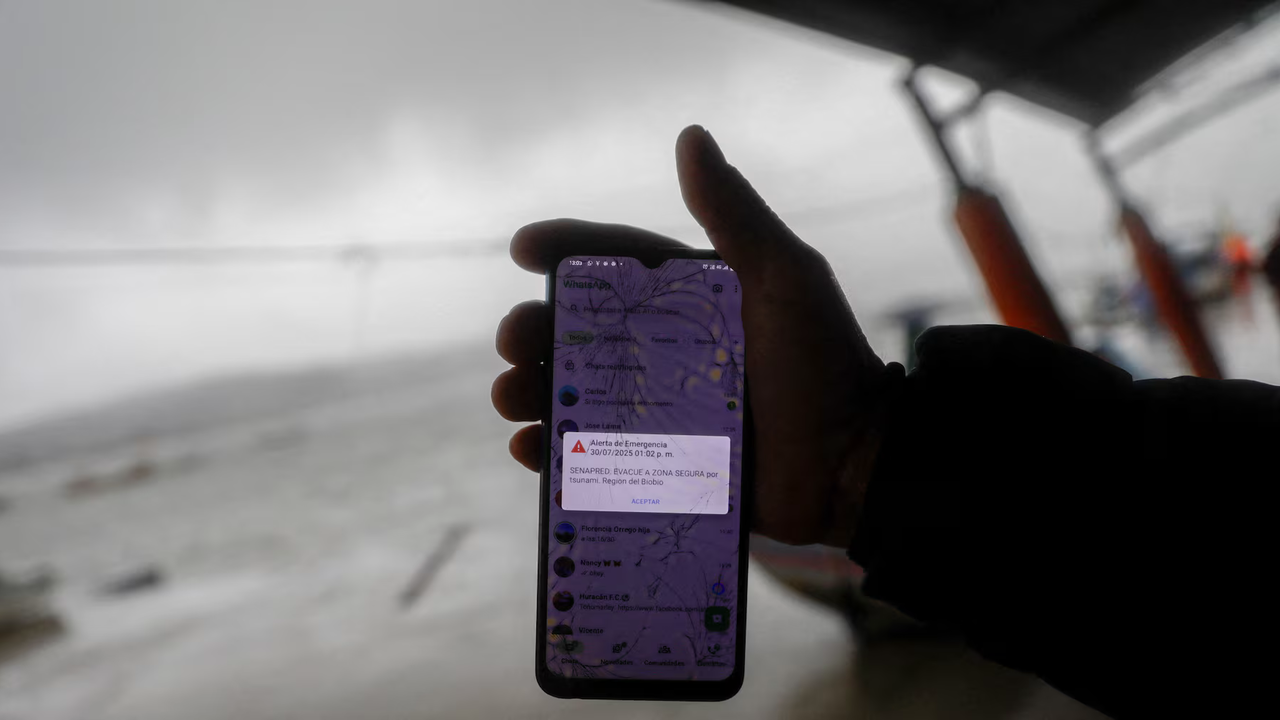
The NASA-CNES Surface Water and Ocean Topography satellite, or SWOT, has revealed that its satellite observations reveal the early stages of a tsunami's impact on the event, following a magnitude 8.8 earthquake in 2025, which triggered a tsunami that spread across the Pacific Ocean. The findings may help improve understanding of future tsunamis and earthquakes at subduction zones, particularly near the ocean trench where two tectonic plates meet and one slides beneath the other. The SWOT satellite made its observations within 70 minutes of the earthquake's start and observed a distinct pattern of smaller waves trailing behind it, which had previously been predicted in computer models and theoretical studies. The study also found that when earthquake-caused movement extends close to the trench, it can generate shorter waves that travel more slowly and spread out over time, forming a trailing pattern behind the main tsunami front. The strength of these trailing waves increases when earthquake movement extends closer to the surface, suggesting these waves are linked to where and how the tsunami was generated near the trench. This knowledge could help improve models used to evaluate tsunami hazards and make coastal communities more resilient.
Related Articles
Lisa Su Hosts Howard Lutnick As Commerce Department Highlights 'Gold Standard' American Tech Stack: AMD CEO Appreciates The 'Open Dialogue' - Apple (NASDAQ:AAPL), Advanced Micro Devices (NASDAQ:AMD)
AMD CEO Lisa Su hosted Commerce Secretary Howard Lutnick to discuss the US Commerce Department's emphasis on American tech dominance, despite challenges faced by the semiconductor sector.

Gladiators finalist: 'It's been fun to rep the flag of south London'
Despite being a slight under-profile figure, Emily Smith-Smith's tenure as Queen of the South is well-known; she excels in promoting herself as "Sheesh" (Sheesh)
Trump taps David Sacks for powerful new White House AI, crypto role
President Donald Trump appointed David Sacks as co-chair of the President’s Council of Advisors on Science and Technology to enhance US digital assets leadership.