While some Big Tech players accelerate PQC readiness, others stay the course

By Dan Goodin
Published on April 17, 2026.
The article discusses the 2010 incident where a sophisticated malware, Flame, hijacked the mechanism Microsoft used to distribute updates to millions of Windows computers worldwide. The attack involved an exploit of MD5, a cryptographic hash function Microsoft was using to authenticate digital certificates. Since 2004, MD5 has been known to be vulnerable to “collisions” which allows adversaries to generate two distinct inputs that produce identical output. This vulnerability was discovered in 2012 and has led to a significant increase in new algorithms being developed to replace RSA and elliptic curves. Google and Cloudflare have both increased their internal deadline for PQC (post-quantum computing/computer) readiness to 2029, an extension of roughly five years. However, experts suggest an industry-wide acceleration is necessary given the high stakes and difficulty of transitioning the Internet to post-Quantum computing. The Defense Department is requiring all national security systems to use quantum-safe algorithms by December 31, 2031, and the National Institute of Standards and Technology is urging the deprecation of vulnerable algorithms by 2035.
Related Articles

Flow Capital to Tokenize $150M Private Credit Fund on Blockchain: Report
Flow Capital Partners plans to tokenize its $150 million private credit fund through DigiFT, aiming to raise $30 million through tokenized shares.

Google Bans Back Button Hijacking, Agentic Search Grows - SEO Pulse
Google's latest spam updates include back button hijacking, agentic search, and manual actions for spam violations, raising concerns about abuse and potential marketing.
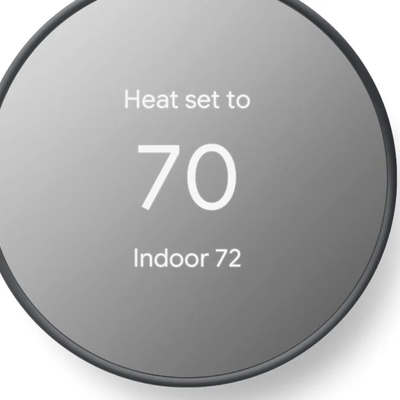
Google Clears Out Nest Thermostat at a New Record Low After Multiple Price Drops Across All Colorways
Google Nest Thermostat is on sale at a record low, offering excellent convenience and smart features, allowing users to control heating and adjust systems in their homes.