MHMS, Japan, and WHO bring malaria elimination closer to reality
Published on March 31, 2026.
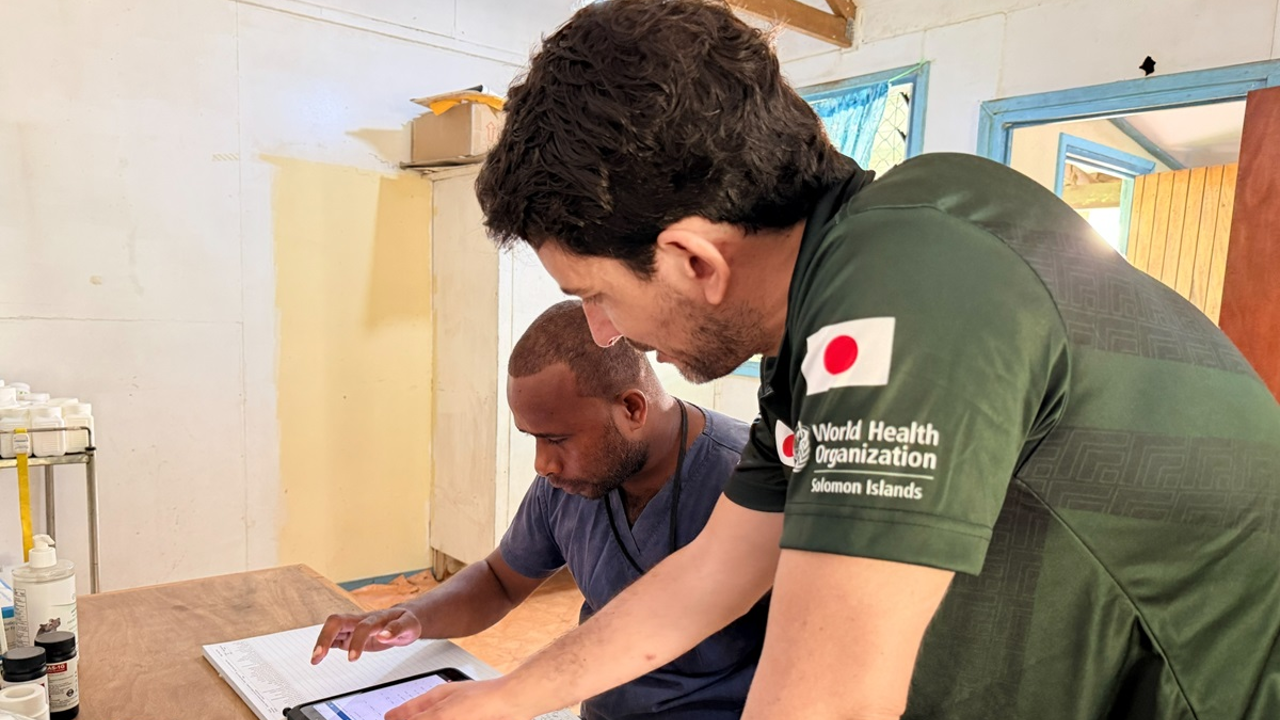
The Japan–Solomon Islands Malaria Reduction Project is a joint collaboration between the Ministry of Health and Medical Services (MHMS), the Government of Japan, and WHO to advance modern malaria control strategies. The project involves real-time digital surveillance, improved Plasmodium vivax case management, targeted indoor residual spraying, and locally driven operational research. The Ambassador of Japan and WHO Representative joined MHMS representatives in Pao and Vura communities and Lunga Health Clinic to observe these modern control strategies helping to protect families from malaria. Indoor residual spraying involves applying a long-lasting insecticide to the inside walls and roofs of homes, killing mosquitoes and other pests. Early results show a promising decline in the most lethal form of malaria (Plasmodum falciparum) from 44% in 2023 to 31% in February 2026. Plans are now underway to expand to all malaria hotspots in Guadalcanal (Zones 1 and 6) and Honiara.
Related Articles

Sugar, the Viral Surfing Dog, Dies Aged 16 Just Weeks After Cancer Diagnosis
Sugar, the viral surfing dog, died at 16 after battling cancer, leaving a significant legacy in the sport.

A New COVID Variant Is Spreading — And These At-Home Tests Are A Smart Buy Right Now
The COVID-19 virus variant is spreading rapidly, requiring easy home tests like iHealth's C.R.O.S.C.R., which are nearly 24% off on Amazon.

Georgia weighs ban on synthetic hemp, while expanding medical cannabis
Georgia lawmakers are considering changes to regulate synthetic hemp products and expanding medical cannabis, following recent criticism of the policy by some critics.