Political questions: Not every issue can be resolved in federal court

By Paul Moreno
Published on March 1, 2026.
Recent Supreme Court decisions have highlighted the political question doctrine, which states that some disputes are committed by the Constitution to the political branches and therefore are not justiciable in federal court. The doctrine, defined as one of jurisdiction and judicial restraint, marks categories that federal courts lack authority to decide or cannot. Examples include the 1962 case Baker v. Carr, which lists factors indicating a nonjusticiable political question such as a “textually demonstrable constitutional commitment” to another branch or a lack of judicially discoverable standards. The author argues that a more robust (but carefully limited) political question theory can be a good constitutional development when it allows courts to remain within their judicial role while preserving legal remedies for genuine rights violations. The political question rule is an old concept, first explained by Chief Justice John Marshall in Marbury v. Madison in 1803, and Kendall v. U.S. in 1838, which blurred the line between discretionary executive choices and ministerial duties.
Related Articles

Trump reveals US destroyed 9 ‘important’ Iranian naval ships — and is ‘going after the rest’
President Trump announced that the US had destroyed nine Iranian naval ships and significantly increased its military presence, including in Afghanistan.
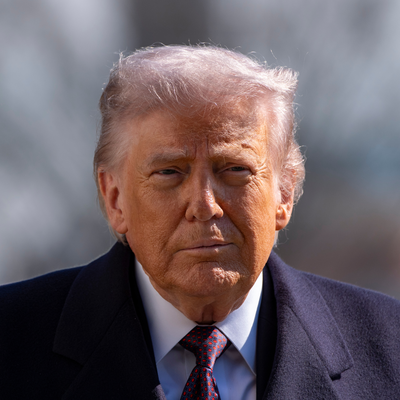
The biggest bet of Trump’s life
Donald Trump’s all-out Iran air strike faces divided support, with 32% of Americans support military action; 42% oppose it; he seeks peace talks.

Israeli government plane parked in Berlin for safety
Israel's state aircraft, the "Wing of Zion," was parked at Berlin's airport for safety reasons after the Iranian nuclear crisis, leaving a significant gap.