'Human evolution didn't slow down; we were just missing the signal': Large DNA study reveals natural selection led to more redheads and less male-pattern baldness

By Kristina Killgrove
Published on April 15, 2026.
A study by staff scientist at Harvard University has revealed that over the past 10,000 years, natural selection has contributed to the evolution of nearly 500 genes in West Eurasians, affecting their appearance and susceptibility to various illnesses. The study, which used a new statistical method to identify natural selection over an 18,000-year period, found that it led to increased frequency of light skin tone, red hair, resistance to leprosy, and decreased the frequency of male-pattern baldness and rheumatoid arthritis susceptibility. The discovery contradicts the view that recent human evolution was limited. The researchers found evidence of natural selection in 479 gene variants in the West Eurasian genome dataset, 60% of which correspond with known traits in present-day people. They are now exploring other groups outside West Eurasia to understand how the global human population evolved.
Related Articles
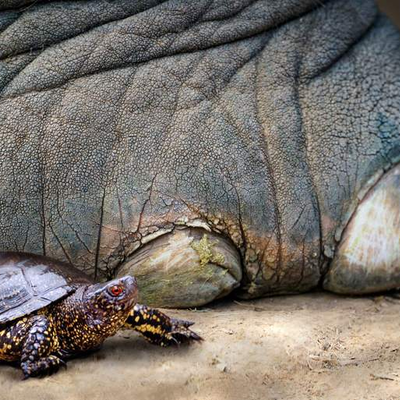
Neanderthal children in central Europe may have hunted turtles for materials, not for food
Neanderthals in central Europe may have hunted turtles for their shells, possibly for medicinal purposes, according to a study published in Scientific Reports.

Viking statue plan for ancient Tynwald Hill site can go ahead
A court-appointed appeal against a Viking statue placement next to the Manx parliament's historic Tynwald Hill site has been dismissed, with conditions still undecided.

After a saga of broken promises, a European rover finally has a ride to Mars
Spacecraft will launch the European Space Agency's Rosalind Franklin Mars rover, potentially in late 2028, on a Falcon Heavy rocket after years of delays and political controversies.