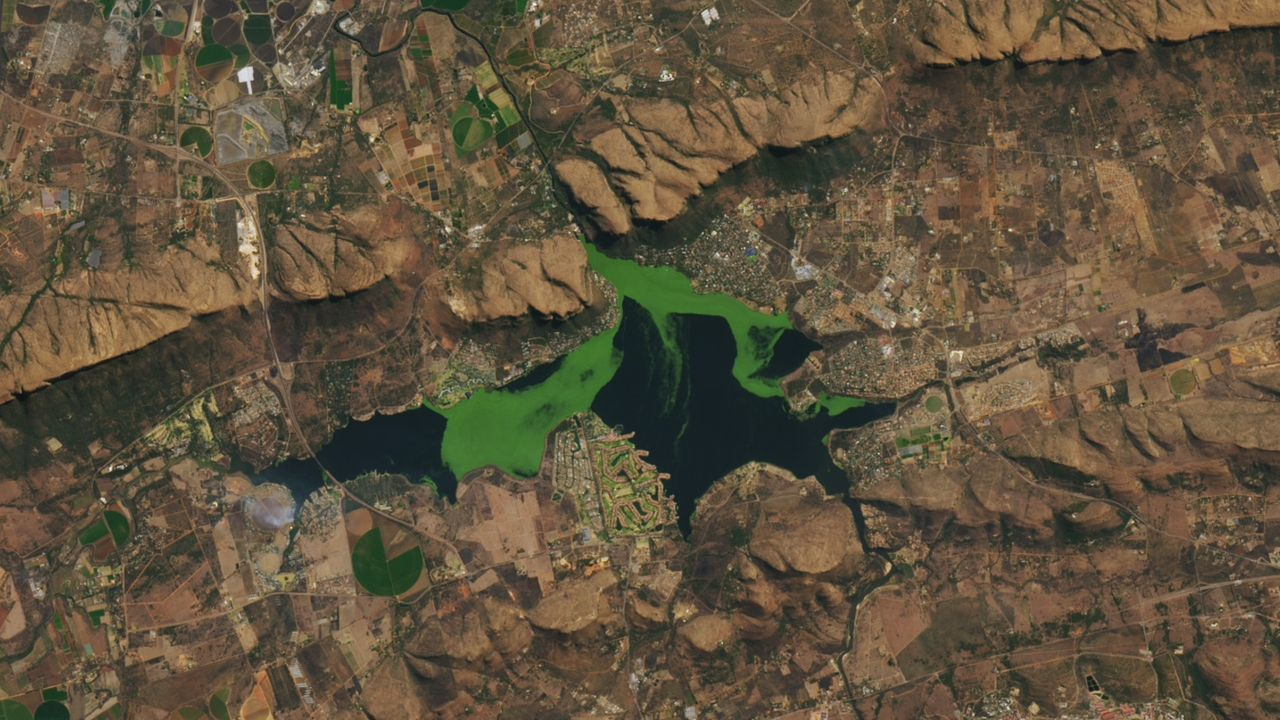
Deadly, vivid-green mass sprawls across South African reservoir — Earth from space
By Harry Baker
Published on April 7, 2026.
A satellite image from South Africa shows a vivid, verdant mass of algae and invasive aquatic plants covering the surface of the Hartbeespoort Dam, a recreational reservoir in South Africa. The phenomenon, known as "hypereutrophication," releases toxic chemicals into the water and leads to "dead zones" that can cause widespread fish fatalities. The reservoir, which was constructed in the 1920s, is fed by the Crocodile River and is used for recreational activities. However, it is also home to invasive species such as water hyacinths and Salvinia minima, which cover the reservoir's surface in large, intertwined mats. The algae within the reservoir can produce toxins that must be filtered out of the water for it to be safe to drink. These algae also consumes oxygen from the water below, leading to a toxic "dead zone" when it spreads widely. The water has been polluted with runoff from runoff courses from farms and golf courses, threatening wildlife and causing rashes on water-sports enthusiasts and sick dogs.
Related Articles

Pitt students help track Artemis II Orion spacecraft
Pitters are helping NASA track the Artemis II Orion spacecraft, using advanced engineering techniques and collaboration to map out its signals.

Watch Artemis 2 race back to Earth in this telescope livestream tonight
The Virtual Telescope Project will broadcast NASA's Artemis 2 Orion spacecraft's return to Earth, tracking its journey across space, with coverage starting at 10:45 GMT today.
A Student Saw One Lonely Rock. He Suspected a Mystery—and Uncovered a 3,700-Year-Old Ritual Site.
An archaeology enthusiast discovered a 3,700-year-old ceremonial stone circle in Farley Wood, revealing extensive Bronze Age remains hidden in the forest.