The True Constitution Doesn’t Grant Universal Birthright Citizenship

By Joseph Addington
Published on April 20, 2026.
The Supreme Court's Chief Justice, John Roberts, made a statement during a recent hearing regarding the birthright citizenship case of Trump v. Barbara, which is the most significant case on the court's docket, that he believes the true Constitution doesn't grant universal birthright Citizenship. This statement was widely perceived as a statement of support for the American legal conservative movement, which emphasizes the importance of the text and of a written constitution. This article suggests that while legal conservatives are rigidly attached to a fixed Constitution, they also miss the potential for an absolute settlement of the birth citizenship question. It also suggests that the language of section one of the Four Amendment, section one, suggests that all persons born in the United States are subject to the jurisdiction of the courts based on the birth right question. The article also notes that while conservative thinkers like L. Brent Bozell Jr. and Russell Kirk have long argued that the written Constitution is an expression of a pre-existing constitutional order and that it should not be settled by it, it is not a constitutional standard that allows for compromise on the issue of free speech.
Related Articles

Iran pushes back after Trump announces new round of talks.
Iranian officials rebuffed US requests for a second round of peace talks, amid tensions over the Strait of Hormuz's closure and global economic upheaval.

Governor’s Medal awarded to military officer who died in Iran.
Gov. Jenniffer González Colón awarded the Governor’s Medal to Capt. Linse Savino, a Puerto Rican Air Force officer who died in an Iran accident, for her extraordinary valor and service.
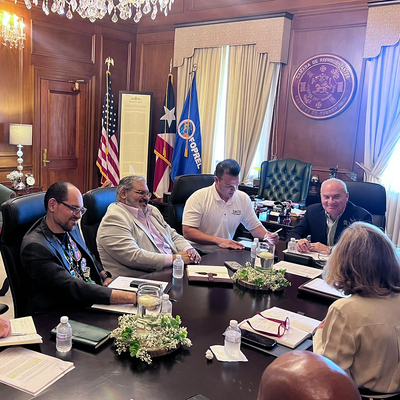
Lawmaker touts gas rewards program in meeting with gov’t, private sector officials.
A Puerto Rico lawmaker proposes establishing a rewards program for gasoline purchases, following a summit with officials and stakeholders to address fuel price fluctuations.